Stick vs. MIG vs. TIG: Which Process is Right For You?
We all know the importance of selecting the right tool for the job. When it comes to welding, the process you choose is every bit as important as the tools themselves. Using the wrong welding process for a certain task can be like trying to saw a 2x4 with a screwdriver. Good luck with that.
If you’re new to welding, there is a lot to consider before just jumping in. Different metals will require different techniques or materials, and some methods are far more suited to certain jobs than others. How can you know which method is right for any given job?
That’s where this post will come in handy.
The three most common welding processes today are Stick, MIG and TIG. Each process has its own set of benefits and limitations. Choosing the correct process will save you a great deal of time and frustration.
Unfortunately, there is no one-size-fits-all welding process. There are some situations that simply demand the clean, intricate work of TIG. Other times, the scope of the job is far too large and a simpler method like MIG or Stick works better.
To get a better idea of which process is most beneficial to you in any given situation, you need to understand each process inside and out. Let’s break down each of these three processes to help you decide which method is right for you.
Stick Welding: (Shielded-Metal Arc)
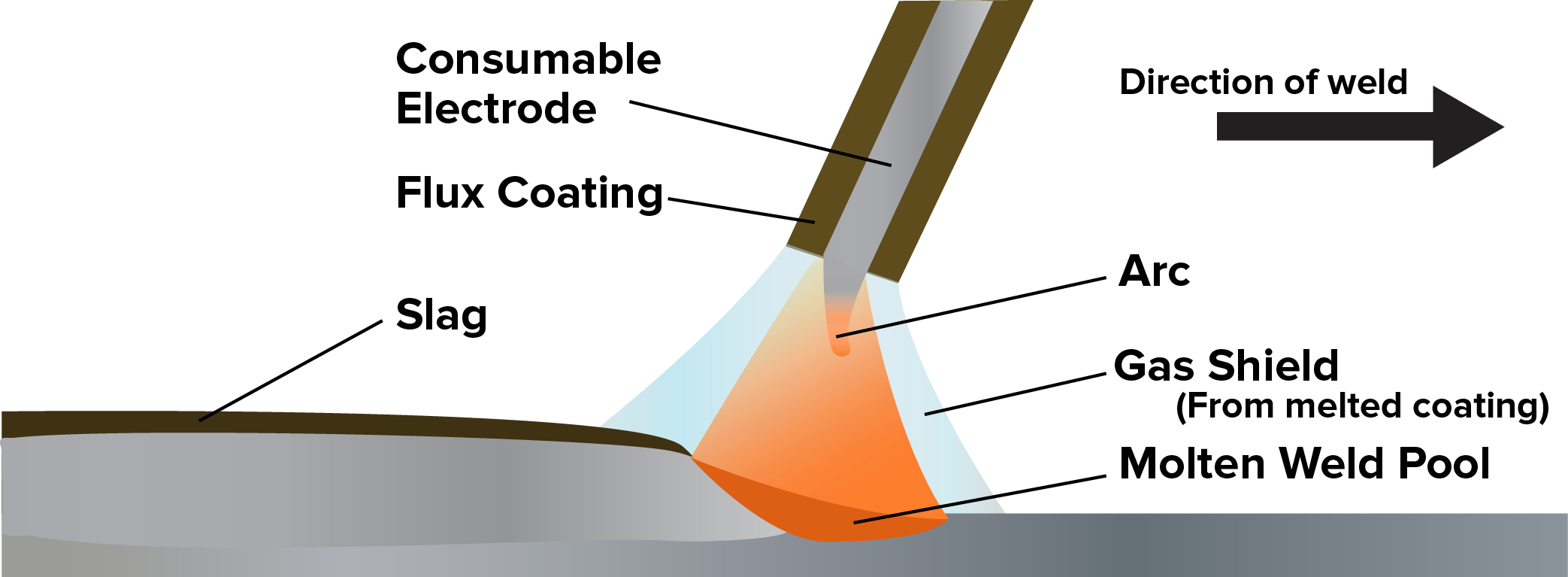
Stick welding is the oldest, simplest, and most cost efficient of the three processes discussed in this post. Because of this, it is one of the most popular welding methods and a common choice for the beginner or hobbyist welder.
How it works: In stick welding, a consumable flux-coated rod called an electrode is used to lay the weld. During the process, both the electrode and the metal workpiece melt, forming a weld pool. This molten pool then cools to form a sturdy joint between the two metals.
Benefits: Stick welding is fairly versatile as it can be used to weld iron, steel, aluminum, nickel, and copper alloys. It can also be performed outdoors or in windy conditions, and has the rare ability to create an effective bond on rusty or unclean surfaces.
Additionally, unlike in MIG and TIG processes, no shielding gas is needed in stick welding because the flux coating on the electrode disintegrates during the process, emitting vapors that protect the weld from atmospheric contamination.
Downside: The major downside to stick welding is the fact that the finished product is not nearly as ‘neat’ as with other methods. Molten splatter is a common occurrence and requires a fair amount of cleaning and sanding when the weld is finished. This leads to more significant cost and work time.
The stick welding process is also very inefficient when it comes to a welder’s time. Between frequent electrode changes, intensive post-weld cleaning, and other similar factors the welder spends only an estimated 25% of their time actually laying weld.
Summary: Stick welding is great for beginners and hobbyists because it’s easy and affordable. The finished result won’t be very clean, but if you need a quick weld that isn’t highly visible and doesn’t require a neat bead, stick is your choice
Recommendations: Welding Supplies from IOC stocks a huge selection of stick welders and accessories from the industry's top brands.
- Check out the MILLER MAXSTAR 150 S for maximum portability and performance in the most compact stick package in the industry. Miller is the most trusted name in welding.
- Or for portable Stick and TIG capabilities, check out the THERMAL ARC 95S TIG AND STICK WELDER. Ideal for home applications, utility/farm work, and maintenance and repair jobs.
MIG Welding: (Metal Inert Gas)
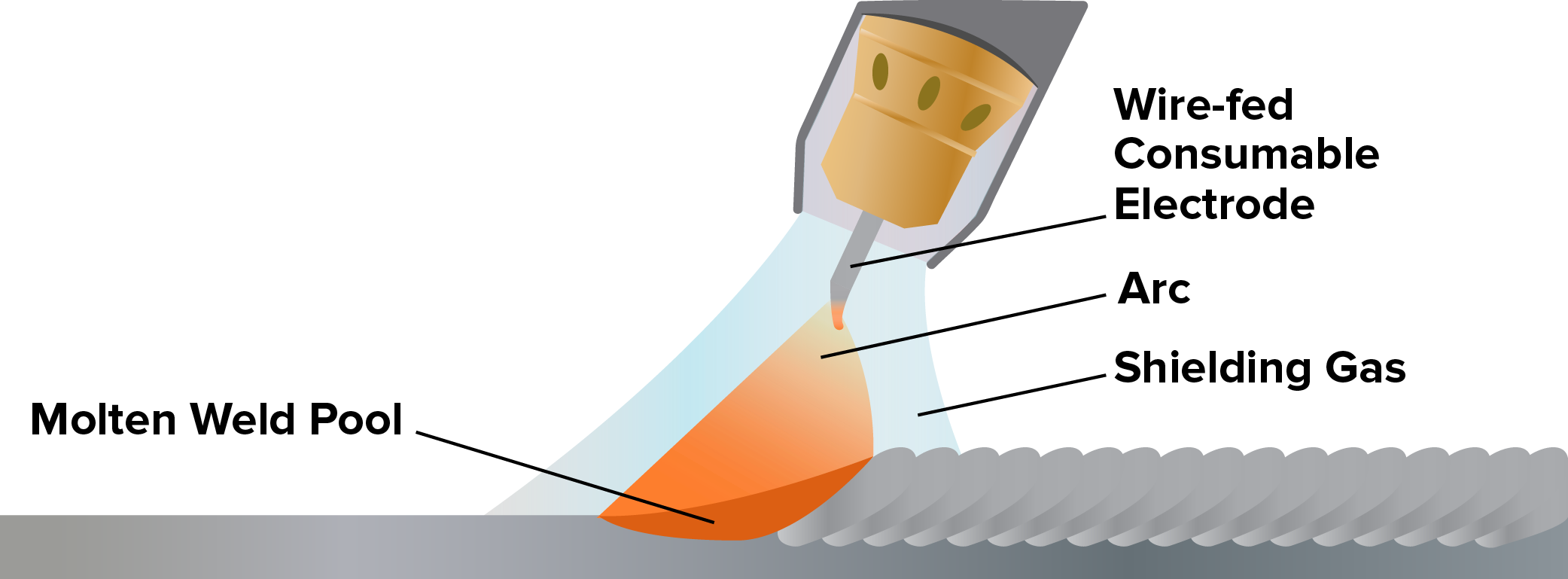
Mig welding is a relatively easy process to learn, commonly requiring only about a week or two to master basic technique. The two most complex aspects of MIG are selecting the correct shielding gas and setting the parameters on the machine. However, once these things are taken care of it becomes largely a “point and shoot” process, often referred to as “the hot glue gun of welding.”
How it works: MIG welders use a tool called a spool gun, which feeds a spooled wire electrode at a constant speed pre-selected by the operator. The gun also emits a shielding gas as it lays the weld. This gas protects the weld area from atmospheric gases such as nitrogen and oxygen, which can cause some serious problems if they come in contact with the electrode, the arc, or the welding metal.
Benefits: The MIG process can be used to create a high-strength weld with great appearance and little need for sanding or cleaning. The use of a shielding gas allows the welder to operate at a continuous rate, making the process fairly quick. MIG welding can be used on any metal surface and has the capability to weld materials as thin as 26-gauge.
Downside: The equipment used in MIG Welding is fairly difficult to use outdoors due to the gases involved. While all types of metal can be welded with the MIG process, different materials require different wire and gasses. Accordingly, a welder using a MIG machine must know what combinations to use and must set his machine accordingly. This is why welding machines with auto-set features save a ton of time and hassle.
Finally, it is highly recommended that the MIG process be performed on the cleanest surface possible. This means that before laying any weld, the welder must insure that any paint, rust, and other debris is scraped from the workpiece.
Summary: MIG welding is a fast, efficient, and easy process that’s perfect for most applications. It’s not as clean as TIG, but not as messy as stick. If you have a few bigger projects around the house or shop, or if you are a professional welder looking to get into some freelance work on the side, a MIG machine is probably the best choice for you.
Recommendations: Welding Supplies from IOC carries MIG welders from the top names in the industry including Miller and Lincoln Electric.
- Check out the MILLER MILLERMATIC 211 for what is quite possibly the best selling and most trusted MIG welder ever made.
- Or the LINCOLN POWER MIG 180C for an affordable yet very powerful machine with a forgiving arc, excellent out-of-position arc action, low spatter and a wide voltage sweet spot.
TIG Welding: (Tungsten Inert Gas)
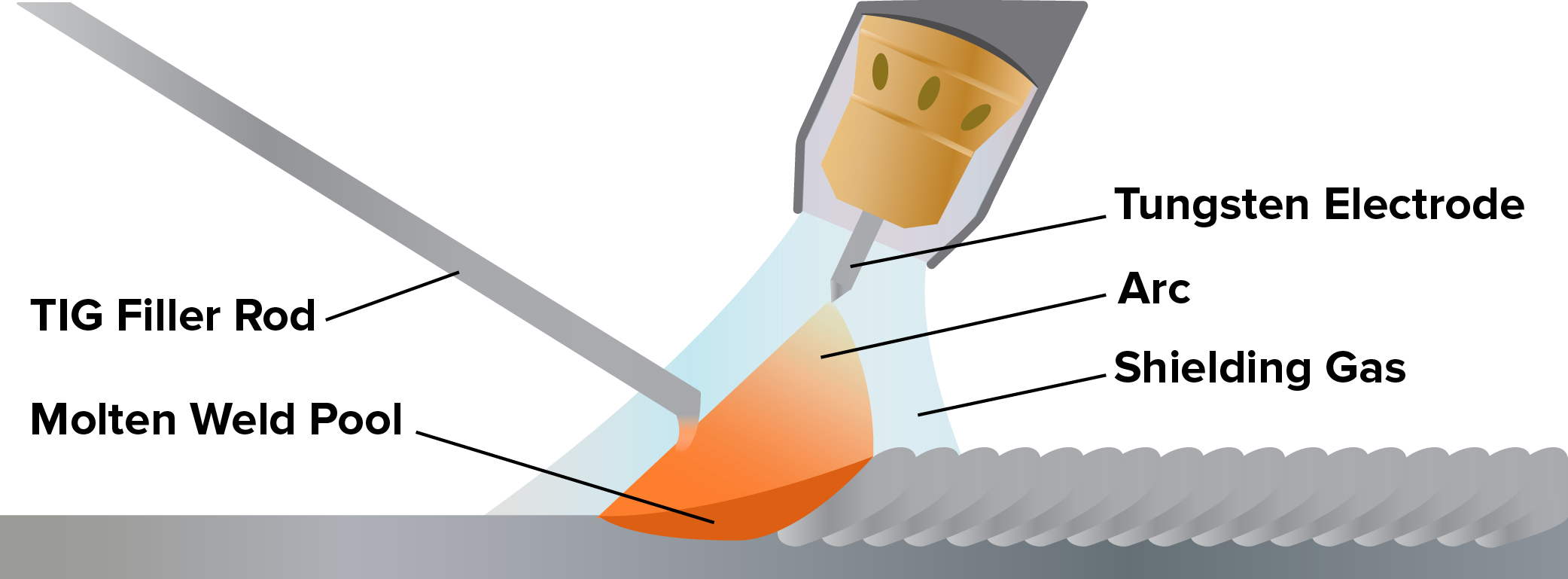
TIG welding is often considered the major league of welding. As far as clean, efficient, and beautiful welds go, the TIG process simply cannot be beat. Artists and ornamental welding professionals often prefer this process for its precision and overall clean look.
How it works: Instead of a metal electrode, TIG welding makes use of a non-consumable tungsten electrode. Tungsten can be heated to a very high temperature before melting, so TIG welding requires additional filler be applied. The operator feeds this filler into the weld area with one hand as he operates the torch with the other. He will also use one foot to operate a control pedal that dictates the heat input as he welds.
Benefits: The TIG process provides the cleanest, most aesthetically pleasing work possible. The process grants the welder a great deal of control over the weld, allowing for stronger, higher quality welds.
Downside: TIG is much harder to learn than the other methods. It requires a highly skilled operator, as it demands the simultaneous use of both hands and a foot. TIG welding is also significantly slower than either MIG or stick, and demands that the surface of the workpiece be absolutely immaculate. All paint, rust, and debris must be removed, and the weld area should be clean enough that you could eat off it.
Summary: When it absolutely has to look perfect, and you have some time to put into it, TIG welding is far and away the preferred technique. TIG is perfect for artwork, ornamental designs, stainless steel, and automotive applications.
Recommendations: Welding Supplies from IOC is your TIG welding headquarters. From big name welding machines to accessories and protective gear, we’ve got you covered.
- Check out the MILLER MULTIMATIC 200 for an incredibly versatile welder. Weighing only 29 pounds and running on either 120 V or 230 V, the Multimatic 200 can go anywhere.
- Or The Lincoln Power MIG 210 MP Multi Process Welder is designed for the hobbyist and contractor alike who wants to do MIG, Stick, TIG and flux-core welding.
In Summary:
Stick Welding
- Simple and cost efficient
- Better suited for windy, outdoor conditions
- Works on dirty or rusty metal
- Requires more post-weld sanding and cleaning
- Result is less “neat”
- Not as efficient of other methods
MIG Welding
- Easiest process to learn
- High welding speeds/longer welds possible
- Very ‘neat’ welds possible with little post-weld cleaning
- Must clean workpiece of all paint and rust before welding
- More difficult to do outdoors than stick
TIG Welding
- Provides highest quality, very precise welds
- Highly aesthetic weld beads
- Much harder to learn/master
- Requires great deal of skill and patience
- Much slower process overall
- Work surface must be immaculately clean
Wonderful web site!!!!!!!
ifyou weld hotdhoess together yo upiss off thehorse regardless of the weldingptoces:)
bill poor horsie
Thanks for your valuable post.
sure.